

Keynote Tutorials
The ICRA 2026 Keynote Tutorials are 90-minute hands-on sessions designed to give young researchers direct, practical experience with tools and methods relevant to robotics and automation. Rather than slide-based lectures, they offer real exercises that let participants work with the methods and tools first-hand.
Keynote tutorial 1
Title: Learning Agile Vision-based Quadrotor Flight: from Simulation to Real-world Adaption
Time: 09:00am-10:30am
Speakers:
Davide Scaramuzza, Rudolf Reiter, Ismail Geles
Abstract
Recent advances in learning-based control have enabled quadrotors to perform agile maneuvers that were previously difficult to achieve with conventional model-based pipelines alone. However, transferring policies trained in simulation to the real world remains challenging due to perception noise, dynamic mismatches, latency, and the limited availability of real-world flight data. This tutorial will provide an overview of learning agile vision-based quadrotor flight, covering the full pipeline from simulation-based training to real-world adaptation. We will discuss how to combine visual perception, state estimation, differentiable simulation, reinforcement learning, and model-predictive control to enable robust, agile flight using onboard sensing. Particular emphasis will be placed on closing the sim-to-real gap through domain randomization, residual learning, system identification, perception-aware training, and real-world fine-tuning. The tutorial will draw on recent results in autonomous drone racing, visual navigation, and event-camera-based flight, highlighting both the opportunities and open challenges in deploying learned agile flight systems outside the laboratory.
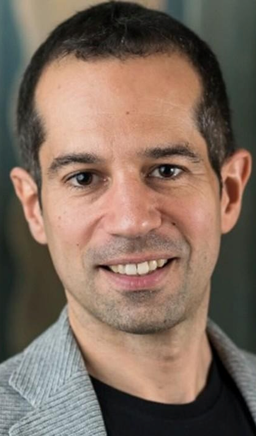
Davide Scaramuzza
BIO
Davide Scaramuzza is Professor of Robotics and Perception at the University of Zurich. He received his Ph.D. from ETH Zurich, was a postdoctoral researcher at the University of Pennsylvania, and held visiting positions at Stanford University and NASA Jet Propulsion Laboratory. His research focuses on autonomous, agile navigation of mobile robots using standard and event-based cameras. He has made pioneering contributions to visual-inertial state estimation, vision-based drone navigation, and low-latency perception with event cameras, with impact on drones, automobiles, AR/VR headsets, and mobile devices. His work inspired aspects of the NASA Mars helicopter’s navigation and led to the first AI-powered drone to outperform world-champion drone racers. He is an IEEE Fellow and recipient of an IEEE Technical Field Award, ERC Consolidator Grant, Google Research Award, and multiple paper awards. He co-founded Zurich-Eye, now Meta Zurich, and SUIND.
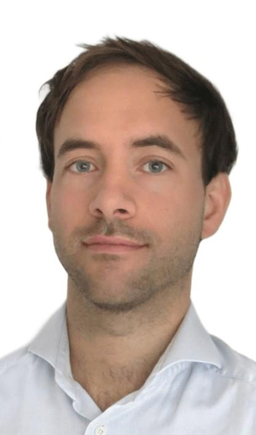
Rudolf Reiter
BIO
Rudolf Reiter is a postdoctoral researcher in Scaramuzza’s group. He received his Ph.D. from the University of Freiburg and specializes in control systems, optimization, machine learning, and robotics. His research focuses on learning- and optimization-based motion planning and control for autonomous systems, with a particular interest in model-based reinforcement learning approaches that integrate predictive planners into learned policies.
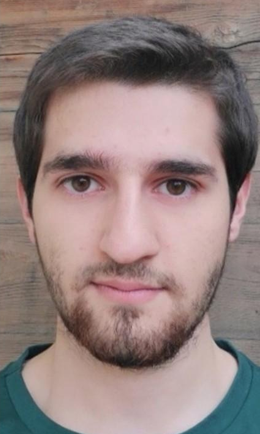
Ismail Geles
BIO
Ismail Geles is a Ph.D. student in Scaramuzza’s group. His research focuses on reinforcement learning, robotics, deep learning, and robot learning, with applications to agile autonomous flight. His work contributes to learning-based approaches for vision-based drone navigation and control, including reinforcement-learning methods for agile quadrotor flight.
Keynote tutorial 2
Title: The Open Motion Planning Library (OMPL 2.0)
Time: 03:00pm-04:30pm
Speakers:
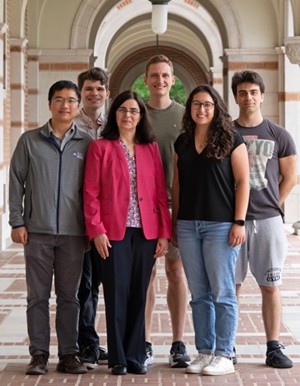
Lydia Kavraki, Thai Duong, Theodoros Tyrovouzis, Clayton Ramsey, Nikki Hart, Arden Knoll
Participants need to install OMPL on their laptops before the tutorial starts. Instructions will be provided at https://kavrakilab.org/icra-2026-ompl-tutorial/, and several members of the group will be available to provide support throughout the session.
Abstract
Robotics research is at the forefront of today’s technological revolution and has attracted enormous attention from academia and industry. Recent advances in both hardware and software enable efficient robot systems with promising applications in factories, warehouses, homes, hospitals, and public spaces. At the core of these applications is motion planning, which aims to generate feasible motions that enable the robot to achieve its tasks. In this tutorial, we will walk you through a new version of the Open Motion Planning Library (OMPL 2.0), released in April of 2026, which offers new capabilities for sampling-based motion planning enabled by recent developments in the field, such as ultrafast planning in microseconds on CPUs, easy Python integration, and new planners and state spaces. The tutorial will start with a brief introduction on sampling-based motion planning, recent advances in ultrafast planning with parallelism, and the organization of the OMPL library. We will continue with hands-on activities, including 1) motion planning with our OMPL interfaces, e.g., for collision checking, environment and state spaces, and our provided planners; and 2) ultrafast motion planning with spherized obstacles via vectorized kinematics and collision checking. Participants need to install OMPL on their laptops before the tutorial starts. Instructions will be provided at https://kavrakilab.org/icra-2026-ompl-tutorial/, and several members of the group will be available to provide support throughout the session.
BIO
Lydia E. Kavraki is the Kenneth and Audrey Kennedy Professor of Computing and the Director of the Ken Kennedy Institute at Rice University. She is widely recognized for laying the groundwork for sampling-based methods. The goal of her research is to establish the computational foundations for useful and safe robots for people. She is a member of NAE, NAS, and NAM and a recipient of the IEEE RAS Pioneer Award. Thai Duong is a postdoctoral fellow at Rice University. He completed his Ph.D. at UC San Diego. His research focuses on developing effective robot autonomy by unifying robot learning, planning, and control. Theodoros Tyrovouzis, Clayton Ramsey, Nikki Hart, and Arden Knoll are Ph.D. students at Rice University, working on task and motion planning in the Kavraki Group.
Keynote tutorial 3
Title: Building, Running and Deploying Modern Software Tools for Robotics
Time: 03:00pm-04:30pm
Speakers:
Peter Corke, Tobias Fischer
Abstract
Robotics is powered by software. The tools we use shape the pace of innovation in research, drive growth in industry, and underpin the education of future developers. This hands-on tutorial presents a modern view of robotics software through live coding examples.
We begin with open-source Python toolboxes for robotics, machine vision, and spatial mathematics, illustrating how they enable clear abstractions and rapid prototyping of complex systems. We then show how these tools can be executed, shared, and extended across major platforms and even in the browser using Pixi and the conda-forge ecosystem.
Participants will see how robotics frameworks such as ROS and machine learning frameworks such as PyTorch can be composed into portable workflows, reducing setup overhead and enabling reproducible experimentation and large-scale benchmarking, including applications such as SLAM.
This tutorial equips attendees to move from fragmented research code to robust, running systems that can be deployed across platforms, from phones to high-performance computing environments, and readily extended by others.
More information at: https://github.com/petercorke/ICRA2026-modern-software-tools
Peter Corke
BIO
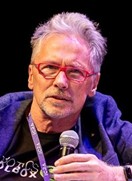
Peter Corke is a robotics researcher, educator, and open-source creator. He is a distinguished professor emeritus at Queensland University of Technology; a fellow of the IEEE and has held many editorial roles. He wrote the best-selling textbook “Robotics, Vision, and Control”, now in its third edition; created robotics and vision Toolboxes for Python; and has won international recognition for teaching, including the 2025 Engelberger Award for Education.

Tobias Fischer
BIO
Tobias Fischer is a Senior Lecturer and ARC DECRA Fellow at the Queensland University of Technology, working on robotic perception and localisation, including in marine environments. He is a strong advocate for open-source robotics and reproducible research, developing cross-platform software workflows that integrate robotics and machine learning. He is a Fellow of the IET, Senior Member of the IEEE, Associate Editor for the IEEE Robotics and Automation Letters, and co-chair of the IEEE-RAS Women in Engineering committee.
Keynote tutorial 4
Title: Behavior Foundation Models from the Ground Up: A Hands-On Tutorial
Time: 03:00pm-04:30pm
Speakers:
Rudolf Lioutikov

Abstract
Behavior foundation models, and the broader path from large language models to vision-language and vision-language-action models, are reshaping robot learning. Designing, training, and running them involves a series of practical choices that strongly shape how these models behave. This hands-on tutorial works through those choices directly, by building and dissecting a minimal behavior foundation model live, in code.
We start with a concise framing: what sets behavior foundation models apart from classical approaches, and how architectures evolve from language to vision-language to action. We then move into code, building a compact and deliberately minimal model that lets us demonstrate different design and architecture choices and their effects.
From there, we explore the decisions that most shape these models by discussing and incorporating various components and observing the consequences. Central foci are action representation and spatio-temporal reasoning, alongside the mechanisms used to condition models on observations and task parameters. We also cover frequently encountered practical challenges, and close with an outlook on where the field is heading.
The goal is to see past the high-level architecture diagrams and understand the concrete decisions behind these models. Attendees will leave ready to start building and contributing in this area. https://intuitive-robots.github.io/bfm-ground-up/
BIO
Rudolf Lioutikov is a tenure-track professor in machine learning and robotics at the Karlsruhe Institute of Technology (KIT), where he leads the Intuitive Robots Lab. His research focuses on data- and compute-efficient behavior foundation models for robotics, with the goal of enabling scalable, on-premise robot intelligence that supports intuitive interaction. He co-leads the RIG research cluster on Learning and Multimodal AI for Robotics. He founded the lab in 2021 after being awarded an Emmy Noether grant by the German Research Foundation. Previously, he was an Assistant Professor of Practice at the University of Texas at Austin. He received his Ph.D. with distinction from TU Darmstadt in 2018. https://www.intuitive-robots.net