


Industry Keynote Sessions
Please join the two Industry Keynote Session to hear about the latest development and interesting research from the industry representatives.
Industry Keynote Session 1
Time: 09:00 – 10:30
9:00 EIT Manufacturing presenting Blueflight, Dominik Kerschat: Automating Documentation Artifacts in Safety Critical Processes
9:10 Beckhoff Automation Gmbh, Thomas Morscher-Unger: ATRO – The future of robotics is modular
9:20 Franka Robotics, Sven Parusel: Translating Innovation: Closing the Gap in Physical AI Deployment
9:30 Amazon, Joey Durham: Amazon’s Robotic Manipulation
9:40 Infineon Technologies AG, Maurizio Incurvati: The road towards a new era of actuators for humanoids
9:50 Robosense, Xiansheng Yang: Breaking Boundaries in 3D Perception, Empowering Spatial Intelligence
9:55 PaXini Tech, Li Jiale: Build a Bridge Between AI Intelligence and the Physical World
10:00 Galbot, He Wang: Towards the AlphaGo and ChatGPT Moments of Embodied AI
10:10 Encord, Max Dolan: Diagnosing the Data Problem in Robotics?
10:20 Flexiv Robotics, Shuyun Chung: Bridging the Last Millimeter in Contact‑Rich Manipulation

Dominik Kerschat, EIT Manufacturing presenting Blueflight
Title: Automating Documentation Artifacts in Safety Critical Processes
Abstract
With the advent of Large Language models and modern parallel processing technologies, automating manual documentation tasks became possible. It is in most organizations’ interest to save their employees time to focus on product tasks instead of documentation. However, in safety-critical industries like aviation and space, human review and oversight have to be combined with machine learning to maintain safety. This talk focuses on the technical challenges of employing AI and how to improve documentation quality, so that
humans can focus on building autonomous systems while maintaining data security.
BIO
Dominik Kerschat is the founder and managing director of Blueflight, an Austrian company developing hardware and software for aerospace systems. He worked in satellite communications during his bachelor’s studies in aviation engineering. Dominik recently completed his master’s at Embry Riddle Aeronautical University and built a digital simulation tool to design sense-and-avoid systems for aircraft.

Thomas Morscher-Unger, Beckhoff Automation Gmbh
Title: ATRO – The future of robotics is modular
Abstract
Industrial robots are typically designed with a fixed, standardized structure, which often forces manufacturers to use a system that’s over-dimensioned, or far larger and more powerful than needed for the task at hand. This not only results in unnecessary costs but also takes up valuable floor space. A new approach, known as modular robotics, offers complete freedom in robot configuration. By using scalable, easily pluggable motor and link modules instead of a rigid, one-size-fits-all design, machine builders can create customized robot solutions with the precise kinematics required for a specific job. Combined with an open, PC-based control technology that provides programming options for both beginners and experienced PLC programmers, the ATRO system from Beckhoff Automation is intended to be a foundational step toward this future of modular industrial robotics.
BIO
Thomas Morscher-Unger, originally from Vorarlberg, began his career with an apprenticeship as a plant electrician. He then moved to Vienna to pursue a degree in mechatronics, specializing in robotics. This academic path led him to an internship at Beckhoff Automation, where he collaborated with the managing director of Beckhoff Austria to develop a concept for modular robotics. Since 2017, he has been leading a 20-person development department in Vienna, dedicated to this project.
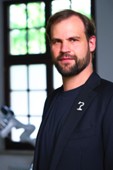
Sven Parusel, Franka Robotics
Title: Translating Innovation: Closing the Gap in Physical AI Deployment
Abstract
not available
BIO
Sven Parusel is a German computer scientist, robotics engineer, and co-founder of Franka Robotics GmbH (formerly Franka Emika) – a German, research-driven robotics company headquartered in Munich and operating globally, acquired by Agile Robots SE in November 2023, where he serves as Head of Research Partnerships. With a background at the German Aerospace Center (DLR) and over a decade of experience in developing lightweight, human-centered robots, he played a key role in creating the award-winning Franka Research 3 robotic manipulator. His work, recognized with the German President’s Future Prize (2017), focuses on making advanced robotics safe, intuitive, and accessible for industry, research, and education.

Joey Durham, Amazon
Title: Amazon’s Robotic Manipulation
Abstract
Amazon stows and picks millions of items a day from its fabric bookshelves. These tasks are difficult to automate because of the many physical contacts between the robot and items already on shelves as well as the huge variety of items that are handled. Maximizing inventory availability close to large metro areas (customers) means there is a strong financial motivation for very high storage density and high reliability. This talk presents development of robotic manipulation capabilities for high clutter and high contact – Amazon’s Vulcan Robots. Our perception algorithms infer available space using images of items on shelves and manifest information like product dimensions and catalog images. We then plan motions with an assumption of contact, and we control those motions with force and torque in the control loop. Custom end of arm tools (grippers) simplify the tasks.
BIO
not available

Maurizio Incurvati, Infineon Technologies AG
Title: The road towards a new era of actuators for humanoids
Abstract
Humanoid robots impose stringent and conflicting requirements on actuators, spanning power density, sensing, control bandwidth, and connectivity. This keynote introduces the specification landscape and maps current technology offerings across these dimensions, presenting recent results in integrated joint-level solutions. Emerging enabling technologies for high-DoF dexterous hands are then discussed, highlighting the key challenges of compactness and multi-axis performance. As an outlook, an innovation roadmap of the critical semiconductor and systems-level advances required to reach human-level actuation performance by 2030 is outlined.
BIO
Maurizio Incurvati ([email protected]) is Lead Principal Engineer at Infineon Technologies, focusing on innovation in GaN-based motor drives. His recent work targets actuator challenges and system requirements for humanoid robotics. He has also been teaching power electronics, motor drives, industrial electronics, and control engineering at the university level. Over his career, he has led R&D activities on integrated modular motor drives, GaN converters, and SiC inverters for UAVs, and has coauthored numerous conference and journal publications with industry and academia. Earlier roles included power-conversion development for large wind turbines and precision measurement, and dc-dc supplies for fundamental-physics research. https://orcid.org/0000-0003-3520-1294

Xiansheng Yang, Robosense
Title: Breaking Boundaries in 3D Perception, Empowering Spatial Intelligence
Abstract
Robots are entering complex real-world environments that require perception systems to deliver wide FOV, long-range sensing, high resolution, precise depth measurement, and robust performance. This talk introduces how digital solid-state LiDAR, enabled by self-developed SPAD-SoC and VCSEL technologies, is advancing robotic 3D perception.
The keynote will discuss key challenges in high-precision dToF sensing, coaxial RGB-D imaging, and synchronized RGB, dToF, and IMU fusion for native pixel-level alignment. RoboSense will also unveil its all-new 3D Camera for robotic perception, supporting navigation, environment understanding, object recognition, manipulation, and spatial intelligence applications.
BIO
Dr. Xiansheng Yang is the Head of the Robotics Product Line at RoboSense, where he leads the end-to-end definition, strategic planning, R&D, and commercialization of LiDAR and 3D sensing solutions for the global robotics industry. He earned his Ph.D. in Control Science and Engineering from the Harbin Institute of Technology, focusing on robotic perception, motion control, parallel robot design, and 3D sensing technologies. An active contributor to the research community, Dr. Yang has published over 30 papers in top-tier journals and conferences, including IEEE/ASME T-MECH, IEEE TIE, and IROS. At RoboSense, he has been instrumental in bringing next-generation digital LiDARs (Airy & Fairy) and solid-state Flash LiDAR (E1R) to market. His expertise lies in bridging advanced academic research with large-scale industrial deployment to empower the robotics ecosystem.
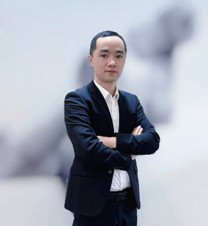
Li Jiale, PaXini Tech
Title: Build a Bridge Between AI Intelligence and the Physical World
Abstract
not available
BIO
not available

He Wang, Galbot
Title: Towards the AlphaGo and ChatGPT Moments of Embodied AI
Abstract
The robotics field stands at the threshold of two transformative inflection points: an “AlphaGo Moment,” in which robots surpass human performance in complex, dynamic physical tasks, and a “ChatGPT Moment,” in which a single embodied AI system generalizes across a wide range of tasks and environments without task-specific fine-tuning.
This talk presents a technical and strategic roadmap toward both milestones. At its core is a World Action Model architecture that integrates high-level perception and planning with real-time whole-body control — demonstrated through the world’s first fully autonomous whole-body planning and control system capable of playing tennis at a competitive level, marking a concrete realization of the AlphaGo Moment in robotics.
Achieving the ChatGPT Moment demands data at an unprecedented scale. The talk will discuss a hierarchical data strategy — spanning internet data, human egocentric video, synthetic simulation, teleoperation, and on-policy real-world experience — designed to accumulate the hundreds of millions of training hours necessary to close the sim-to-real gap and unlock general-purpose robot intelligence.
Beyond research, the talk will address the path from laboratory breakthroughs to real-world deployment, with robots already operating in commercial and industrial environments including pharmacy logistics, retail, and manufacturing. Prof. Wang will conclude with a vision for embodied AI not merely as a collection of capable robots, but as a universal intelligent operating system for the physical world.
BIO
He Wang is assistant Professor at Peking University, founded the Embodied Perception and Interaction Lab; MIT Technology Review’s “Innovators Under 35” (TR35 China), Peking University-China Optics Valley Award for Scientific and Technological Achievements Transformation (2024), Intel China Academic Excellence Program Scholar. Published over 50 papers in top conferences and journals and received multiple best paper nominations, including ICCV, ICRA, Eurographics, as well as WAIC Youth Outstanding Paper Prize. Area Chair for CVPR and ICCV, and also acts as a reviewer and program committee member for various top conferences.
Stanford PhD graduate, under the mentorship of Professor Leonidas Guibas, a member of the American Academy of Arts and Sciences, National Academy of Engineering, and National Academy of Sciences. Tsinghua University Bachelor.

Max Dolan, Encord
Title: Diagnosing the Data Problem in Robotics?
Abstract
The robotics field has spent the last two years rediscovering an old lesson: data is the bottleneck. As foundation models for manipulation and navigation mature, the differences between teams no longer come from architecture – they come from what those models are fed. Yet most robotics datasets are accumulated, not curated. They contain enormous redundancy, silent multimodal misalignments, and long-tail failure modes nobody can find on demand. This talk argues that the next leap in robot capability will come from teams who treat their data the way ML teams treat their models: instrumented, queryable, and continuously refined.
BIO
Max Dolan is an ML Solutions Engineer at Encord, whose work centers around physical AI and robotics teams. His core focus is on helping ML and product teams diagnose where data – not architecture – bottlenecks real-world model performance, and on designing curation, multimodal annotation, and evaluation workflows that close that gap across VLAs, world models, and broader perception stacks. With previous experience in the insurance technology industry and at CERN, Max has specialised in helping teams handle large, messy datasets.
Shuyun Chung, Flexiv Robotics
Title: Bridging the Last Millimeter in Contact‑Rich Manipulation
Abstract
Despite achieving positional accuracy far beyond that of humans, robots still face significant challenges in attaining human-level dexterity in contact-rich manipulation tasks. A fundamental limitation in Physical AI is the scarcity of contact-related data, which is also among the most costly and time-intensive data to acquire. This constraint represents a major contributor to the sim-to-real gap in robotic systems operating in real-world environments. In this talk, we will present how Flexiv addresses the challenges of position uncertainty and data scarcity through advanced force control and force sensing technologies. Drawing upon large-scale deployments across manufacturing, medical, logistics, and Physical AI applications, we will share practical insights into enabling robots to achieve more adaptive and dexterous interaction with the physical world.
BIO
Dr. Shuyun Chung is the Co-Founder and Chief Robotics Scientist of Flexiv, a pioneering robotics company recognized for its breakthroughs in adaptive robotics and industrial-grade force control, achieving unicorn status in 2022. With more than two decades of experience in robotics, Dr. Chung earned his PhD in Mechanical Engineering from National Taiwan University and later conducted postdoctoral research at Stanford University, where he developed advanced multi-degree-of-freedom torque control and real-time motion planning frameworks that have influenced industrial robotics, medical robotics, underwater systems, and humanoid platforms. An entrepreneur based in Silicon Valley, Dr. Chung co-founded Orobotix in 2015 and led the development of the first commercially modular underwater drone. In 2016, he co-founded Flexiv and has since contributed to the development of the company’s core robotic technologies. Flexiv introduced Rizon in 2019, the world’s first adaptive robot combining industrial-grade force control with human-like task adaptability, followed by Moonlight in 2022, the world’s first force-controlled parallel robot. Today, Flexiv’s robotic systems are deployed across industries including automotive, consumer electronics, home appliances, food processing, and healthcare, reflecting the company’s rapid growth and continued innovation in intelligent robotics.
Industry Keynote Session 2
Time: 09:00 – 10:30
9:00 Technology Innovation Institute, Danilo Caporale: From Demos to Deployment: Building Humanoids That Work
9:10 TARS, Wenchao Ding: Foundations for General Physical Intelligence
9:20 Gento Robotics, Hanwen Kang: Gento: Touching the world Gently
9:30 Lightwheel, Martin Elbs: Newton Physics Simulation Engine: A Lightwheel Perspective on Robotics Applications
9:40 AGIBOT, Jianlan Luo: Robotic Foundation Models That Learn While Deploying
9:50 NEBIUS, Timothy Le, Mikhail Rozhkov: GPUs for Robotics: Benchmarking LeRobot Policy Training Across GPU Architectures
10:05 Weights & Biases by CoreWeave, Edmund Kuras: Bare Metal to Models: Accelerating embodied AI
10:20 Wiley, Sneha Rhode Gupta: Publishing in Wiley’s Advanced Portfolio journals: Advanced Robotics Research & Advanced Intelligent Systems

Danilo Caporale, Technology Innovation Institute
Title: From Demos to Deployment: Building Humanoids That Work
Abstract
Humanoid robots are transitioning from laboratory demonstrations to credible candidates for real economic value across logistics, hospitality, and other labor-intensive industries. Realizing this transition, however, requires closing several gaps at once: robust whole-body control under contact and disturbance, dexterous manipulation in unstructured environments, and embodied AI capable of generalizing across tasks and embodiments. This talk presents how the Autonomous Robotics Research Center (ARRC) at the Technology Innovation Institute is approaching this challenge through an integrated research and product development agenda that combines whole-body loco-manipulation, foundation models for embodied intelligence, and a deliberate sim-to-real strategy grounded in large-scale simulation and targeted real-world data collection. Drawing on use cases co-developed with industrial partners in the UAE, we will share early lessons on what it takes to move humanoids from controlled demos to repeatable deployments, and outline the role of Abu Dhabi’s emerging robotics ecosystem in accelerating this trajectory. We conclude with our perspective on the open scientific and engineering problems that will define the next phase of humanoid robotics.
BIO
Danilo Caporale is Senior Director at the Autonomous Robotics Research Center (ARRC) at the Technology Innovation Institute (TII) in Abu Dhabi, the applied research pillar of the Advanced Technology Research Council. At ARRC, he leads research and development on humanoid robots targeting real-world deployment across logistics, hospitality, and other key industries. His work focuses on bridging advanced robotics research with industrial-scale applications, combining whole-body control, manipulation, and embodied AI into integrated humanoid platforms.
Before joining TII in 2021, he was based at Research Center E. Piaggio at the University of Pisa, Italy, where he contributed to the development of planning and control algorithms for humanoid robots, multi-agent coordination, and industrial robotics within EU flagship projects including WALK-MAN and ILIAD. During this period he also tutored several master’s and PhD students who have since gone on to excel in industry and academia. In parallel, he led the development of full-scale autonomous race cars, an effort that since joining TII produced the most advanced autonomous open-wheeler, now raced in the A2RL championship at Yas Marina, Abu Dhabi. He holds a PhD in Control Systems from Politecnico di Milano. He is the father of two girls.

Wenchao Ding, TARS
Title: Foundations for General Physical Intelligence
Abstract
Large language models have advanced along a three-phase scaling trajectory of data, model, and test-time computation, whereas embodied intelligence remains bottlenecked at the first phase by the scarcity of high-quality physical interaction data. This talk presents the TARS Trinity framework, a closed loop of data, models, and large-scale deployment that transfers the scaling laws validated in large AI systems to the physical world. To overcome the fundamental limitations of teleoperation-based data collection in naturalness and scalability, we introduce a human-centric wearable acquisition stack built around SenseHub, together with World in Your Hands, a large-scale vision–tactile–action dataset that substantially improves spatial reasoning, world modeling, and cross-embodiment generalization. On the algorithmic side, the talk details the end-to-end architecture of AI World Engine 3.0, which comprises five key components: Dynamic Spatiotemporal Reasoning powered by a World Tokenizer, Whole-Body End-to-End Control, Omni-Sense Decision-making, High-density Tactile Sensing, and Latent Action Smoothing for high-frequency, jitter-free execution. Real-world tasks such as sub-millimeter deformable insertion and long-horizon wiring-harness assembly demonstrate substantial gains in viewpoint robustness and execution continuity.
BIO
Wenchao Ding is Co-Founder and Chief Scientist of TARS Robotics, as well as Associate Professor at Fudan University, with research focused on embodied intelligence, particularly perception, decision-making, and planning. He received his Ph.D. from the Hong Kong University of Science and Technology. In 2020, he joined Huawei’s Intelligent Automotive Solution BU through the company’s “Genius Youth” program, where he led the Prediction and Decision-Making team for the Advanced Driving Solution (ADS) and built Huawei’s end-to-end ADS decision-making framework from the ground up. In 2023, he joined Fudan University. He has published more than 50 papers in leading international journals and conferences, and serves as an Associate Editor for top robotics venues including ICRA and IROS. He is also a recipient of Best Paper Nomination Awards at IEEE ROBIO and IEEE ICCD. In 2025, he co-founded TARS Robotics as its Chief Scientist, where he introduced a new human-centric paradigm for embodied intelligence. The company has set successive records for the largest angel and pre-A funding rounds in China’s embodied intelligence sector, and achieved a Guinness World Record for robotic flexible wiring-harness insertion completed in one hour.

Hanwen Kang, Gento Robotics
Title: Gento: Touching the world Gently
Abstract
not available
BIO
Hanwen Kang is Director of Robotics and AI Research at Tianji Intelligence, with research focused on robotics and embodied intelligence, particularly in robot perception, reasoning, and planning. He received his Ph.D. from Monash University and has published more than 40 papers in leading international journals and conferences. Prior to joining Tianji Intelligence, he worked as a Senior Research Fellow at the Monash Robotics Centre, where he led research in robotic manipulation and field robotics, including applications in smart mining, agricultural robotics, and MARS systems. In 2025, he joined Tianji Intelligence as Director of Robotics and AI Research, focusing on advancing Physical AI infrastructure. His work centers on developing high-performance robotic motion generation technologies and teleoperation systems. In parallel, his team is building human-centric data collection and processing systems to support next-generation physical AI infrastructure.

Martin Elbs, Lightwheel
Title: Newton Physics Simulation Engine: A Lightwheel Perspective on Robotics Applications
Abstract
The advancement of Physical AI is currently hindered by the Sim2Real gap—the discrepancy between virtual training and physical reality. This talk explores how Newton, an open-source, GPU-accelerated physics engine developed under the Linux Foundation in collaboration with industry leaders like NVIDIA and Google DeepMind. Newton addresses this gap through high-fidelity multi-physics solvers.
As a member of the International Technical Steering Committee (TSC), Lightwheel Intelligence bridges the data gap using a “Measure-Solve-Generate” framework. By capturing empirical material properties in a physical measurement factory and integrating them into Newton’s environment, we enable the generation of physically grounded synthetic data at the scale required for robot foundation models.
BIO
Martin Elbs is VP of Global Sales at Lightwheel. He is leading global sales strategy, with a focus on expanding Lightwheel’s presence across OEMs, automotive leaders, and industrial enterprises worldwide. Previously he was Chief Customer Officer at IPG Automotive in Karlsruhe, Germany since 2015. Before that he was Global Head of Commercial for Lotus Engineering in Hethel, United Kingdom, driving the market expansion of Lotus Engineering into Asian automotive markets.
Martin has held a number of positions with ETAS, a subsidiary of Robert Bosch Corporation during his 15 years with the company, including Vice President Sales Germany and Director Strategic Marketing. For ETAS, he also worked 6 years in Ann Arbor, Michigan, USA.
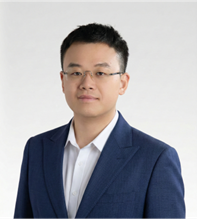
Jianlan Luo, AGIBOT
Title: Robotic Foundation Models That Learn While Deploying
Abstract
Robotic foundation models are emerging as a scalable path toward generalist robots. Large-scale pretraining provides the foundation for broad representations and initial capabilities, while post-training on real-world deployment experience refines and expands these capabilities toward reliable operation. In this talk, I will present a closed-loop approach to physical AI through two complementary efforts. First, I will introduce tau-0-wm, an open-source robotic world foundation model trained on diverse robot and non-robot data to learn predictive representations of physical interactions. Second, I will discuss Learning While Deploying, a framework that turns deployment into a continual post-training process, converting real-world successes and failures into policy improvement through real-world learning. Together, these components form a data flywheel for physical AI: pretrain from large-scale diverse data, deploy in real environments, learn from interaction, and continuously improve robot capabilities through real-world experience.
BIO
Jianlan Luo is an Associate Professor at the Shanghai Innovation Institute and Chief Scientist at AGIBOT. He received his Ph.D. from the University of California, Berkeley. After completing his Ph.D., he worked as a researcher at Google before returning to UC Berkeley as a postdoctoral scholar. His research focuses on building principled and scalable robotic learning systems that enable reliable, high-performance behavior in complex real-world environments. His work has been recognized by honors including MIT Technology Review’s TR35 China, and has been featured in media outlets including WIRED, TechCrunch and more.

Timothy Le, NEBIUS
Title: GPUs for Robotics: Benchmarking LeRobot Policy Training Across GPU Architectures
Abstract
Robotics workloads stress GPU architectures differently than standard ML benchmarks, yet the community lacks robotics-specific profiling data to guide hardware decisions. We benchmark multiple LeRobot policy architectures, spanning lightweight imitation learning models (38-52M parameters) to vision-language-action models (450M parameters), across four NVIDIA GPUs covering three architectures: L40S (Ada Lovelace), H200 (Hopper), B300 (Blackwell Ultra) and RTX PRO 6000 (Blackwell).
BIO
Timothy Le is a Physical AI Engineer at Nebius AI Cloud, building the Nebius AI Workbench for robotics and physical AI workloads. He brings experience from the cloud industry (VMware, Oracle) and holds an MS in Computer Science (Cloud Computing and AI) from Stanford University. He is also an Executive MBA candidate at Georgia Tech.

Mikhail Rozhkov, NEBIUS
Title: GPUs for Robotics: Benchmarking LeRobot Policy Training Across GPU Architectures
Abstract
Robotics workloads stress GPU architectures differently than standard ML benchmarks, yet the community lacks robotics-specific profiling data to guide hardware decisions. We benchmark multiple LeRobot policy architectures, spanning lightweight imitation learning models (38-52M parameters) to vision-language-action models (450M parameters), across four NVIDIA GPUs covering three architectures: L40S (Ada Lovelace), H200 (Hopper), B300 (Blackwell Ultra) and RTX PRO 6000 (Blackwell).
BIO
Dr. Mikhail Rozhkov is Technical Product Manager for Serverless AI at Nebius, where physical AI and robotics is a core focus domain. His work centers on making GPU-intensive training workloads — policy learning, imitation learning, simulation — accessible without cluster management overhead. He has authored hands-on tutorials bridging serverless infrastructure with robot learning workflows, and previously built MLOps pipelines across automotive, satellite, and medical domains.

Edmund Kuras, Weights & Biases by CoreWeave
Title: Bare Metal to Models: Accelerating embodied AI
Abstract
Training embodied AI requires overcoming unpredictable physical environments that standard machine learning models never face. This session explores the infrastructure behind modern autonomous systems, tracing the evolution from perception-focused VLMs to action-driven VLA models. Because real-world training is slow and noisy, advanced teams rely on high-fidelity simulation environments to compress years of learning into hours of compute. Using CoreWeave hardware and Weights & Biases as a reference MLOps stack attendees will learn how to scale parallel simulations, leverage ray-tracing for photorealistic data and bridge the sim-to-real evaluation gap by mapping raw metrics directly to visual outcomes.
BIO
Edmund Kuras is an Account Solution Architect at CoreWeave, where he partners with organizations pushing the boundaries of AI and robotics. His work centers on helping customers architect high-performance CoreWeave compute solutions and effectively leverage Weights & Biases (W&B) for robust experiment tracking and model management across complex robotics and AI workflows. With a strong background in bridging technical solutions and client needs, Edmund previously drove customer success in the cybersecurity sector and served as a Product Manager in advertising technology.

Sneha Rhode Gupta, Wiley
Title: Publishing in Wiley’s Advanced Portfolio journals: Advanced Robotics Research & Advanced Intelligent Systems
Abstract
not available
BIO
Sneha Rhode Gupta (Editor-in-Chief, Wiley): Sneha Rhode Gupta gained her PhD from the University of Cambridge. She was then a Schlumberger Fellow at Imperial College London. She moved to scientific publishing in 2016. Since then, she has worked on several materials science and engineering journals. In 2022, she joined Wiley, where she now works as the Editor-in-Chief of Advanced Robotics Research and the Deputy Editor of Advanced Materials and Advanced Intelligent systems.