


2026 Plenary Sessions
Below you will find a list of plenary sessions taking place throughout ICRA 2026.
Plenary 1
Time: 14:00 – 14:50
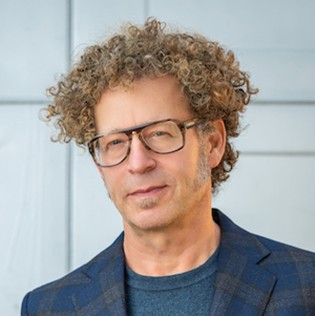
Prof. Ken Goldberg, UC Berkeley and Ambi Robotics:
A Tale of Two Cultures: Can Agentic Coding Close the Gap?
Abstract
Advances in language and computer vision, driven by internet-scale datasets, have enabled broad generalization across tasks. In contrast, robot manipulation remains fundamentally data-limited. Using commonly accepted metrics for converting word and image tokens into hours, the amount of data used to train contemporary vision-language models (VLMs) is equivalent to roughly 100,000 years of physical experience.
I will review four approaches to closing this gap: simulation, world models, teleoperation, and a fourth approach in which data is collected as robots operate in production environments—i.e., real-world automation. Achieving speed and reliability in this setting often requires what I call Good Old-Fashioned Engineering (GOFE), which includes well-established model-based methods such as inverse kinematics, feedback control (PID), and SLAM.
Recent advances in agentic coding (e.g., Claude Code and OpenClaw) suggest a new path for this fourth approach. “Code-as-Policy” combines LLM-based code generation with VLM perception to integrate engineered skills and learned policies into modular, interpretable control programs. I will discuss recent results and outline how Code-as-Policy could enable reliable automation systems that perform useful work while generating the data needed to close the gap.
BIO
Ken Goldberg is William S. Floyd Distinguished Professor of Engineering at UC Berkeley, President of the international Robot Learning Foundation, member of the US National Academy of Engineering, IEEE Fellow, co-founder and Editor-in-Chief emeritus of the IEEE Transactions on Automation Science and Engineering (T-ASE), Co-Founder of Jacobi Robotics, and Co-Founder/Chief Scientist of Ambi Robotics. Ken leads research in robotics and automation: grasping, manipulation, and learning for applications in warehouses, homes, agriculture, and robot-assisted surgery. He is Distinguished Professor of IEOR, EECS, and Art Practice. Ken has published 10 US patents, over 450 refereed papers, and has presented over 600 invited lectures to academic and corporate audiences. http://goldberg.berkeley.edu
Plenary 2
Time: 14:00 – 14:50
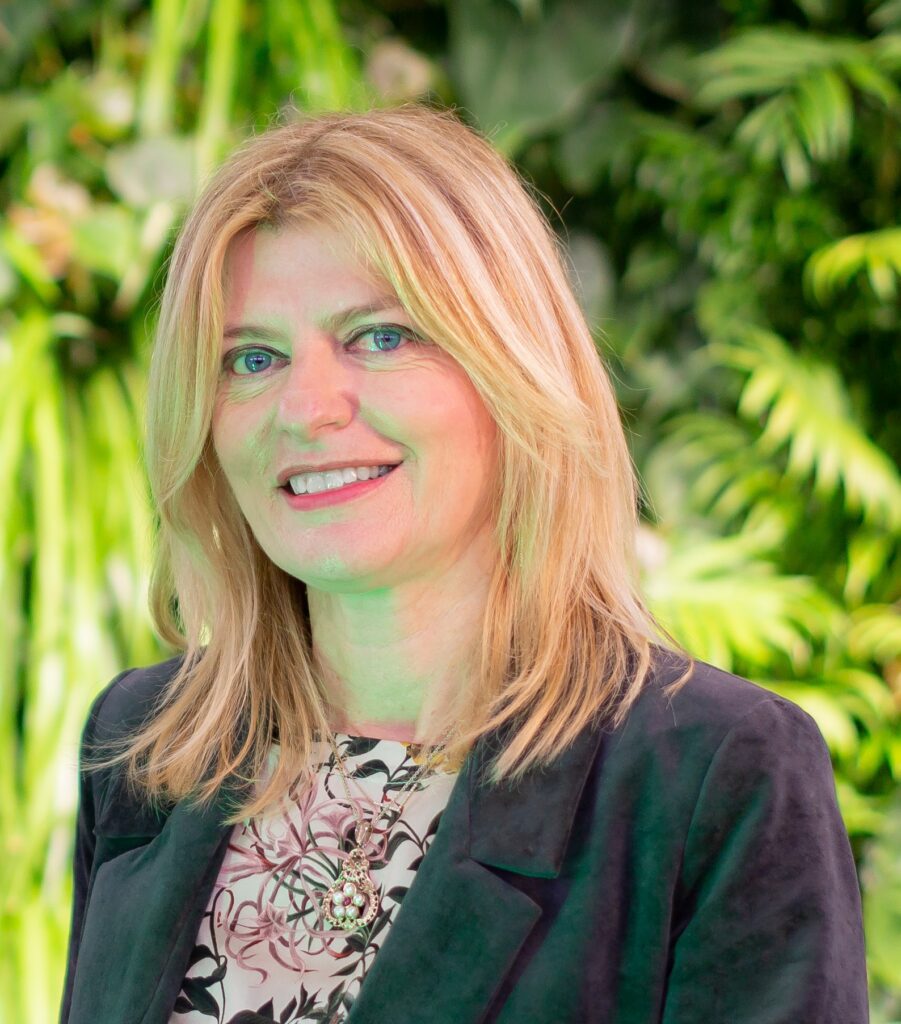
Prof. Barbara Mazzolai, Istituto Italiano di Tecnologia (IIT):
Natural Revolution: Biological Principles for Frugal and Sustainable Robotics
Abstract
A new “species” of robots is rapidly emerging: humanoids that jump and fight, quadrupeds that traverse complex terrains, and autonomous machines designed to operate everywhere—from industry to our homes. This evolution raises a critical, yet often overlooked question: can a robot-pervasive society be energetically sustainable? Visions such as “a robot in every home” suggest a future where robotics becomes ubiquitous, raising important questions about its large-scale energy footprint.
In this talk, I argue that achieving sustainability in robotics demands a fundamental shift in how we conceive intelligent machines. Biology offers a powerful lens: organisms operate under strong energetic constraints and achieve efficiency by exploiting body structure, distributed control, and interaction with the environment.
Drawing from examples such as octopuses and plant systems, including seeds, I will explore how these principles can inform the design of more sustainable robots. These systems rely on distributed intelligence, growth, and mechanisms that exploit ambient sources (e.g., air humidity changes) to store and release potential energy. Rather than relying on continuous high-level control, functionality emerges from local interactions between body and environment.
This perspective leads to a new paradigm for robotics: one where intelligence is not only programmed, but physically instantiated; where control is not centralized, but distributed; and where energy is not merely consumed, but strategically harnessed from the environment. The challenge ahead is not just to build more capable robots, but to design a new class of machines that can coexist sustainably with our planet.
BIO
Barbara Mazzolai is Associate Director for Robotics and Director of the Bioinspired Soft Robotics Laboratory at the Istituto Italiano di Tecnologia (IIT), Genoa. She previously led the IIT Center for Micro-BioRobotics (2011–2021). She has served on the Scientific Advisory Board of the Max Planck Institute for Intelligent Systems (2016–2024) and is currently a member of the SAB of the Max Planck Queensland Centre and of the advisory committee of the Cluster of Excellence livMatS (Germany).
Since 2024, she has been Adjunct Professor in soft robotics at the Politecnico di Milano. She is a member of the Administrative Committee of the IEEE Robotics and Automation Society, Deputy Editor-in-Chief of Soft Robotics, and Senior Editor for IEEE RA-L.
Her research focuses on bioinspired soft robotics. She has coordinated major EU projects, including PLANTOID, GrowBot, and I-SEED, and currently leads the ERC project “I-Wood” on forest-inspired robotic networks. She has authored over 260 scientific publications.
Plenary 3
Time: 14:00 – 14:50
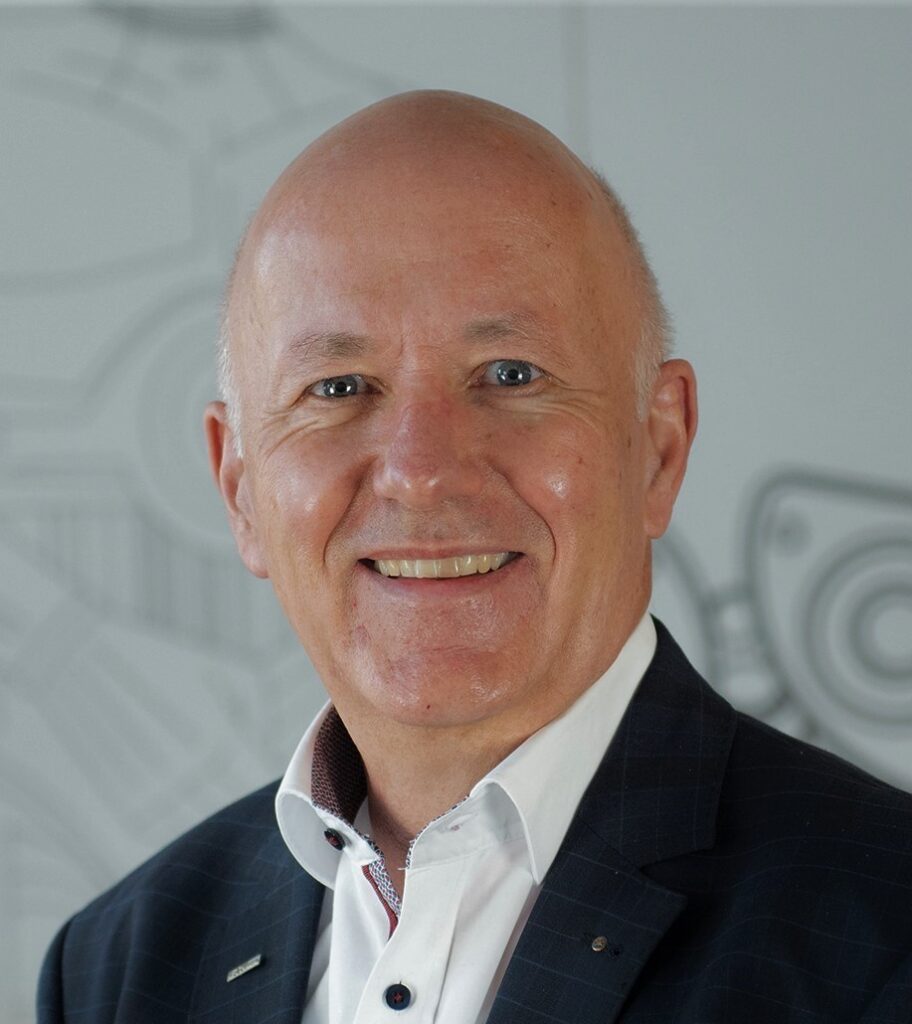
Prof. Roland Siegwart, Autonomous Systems Lab, ETH Zürich:
Aerial Robots – From Omnidirectional Flight to Physical Interaction at Height
Abstract
In the last 20 years, flying robots have evolved from fascinating lab prototypes to extremely useful tools for aerial imaging, search and rescue, and inspections at height. However, the limited flight time and payload, as well as the restricted computing power of drones renders autonomous operations quite challenging. This talk will focus on the design and autonomous navigation of flying robots. Innovative designs of flying systems, from solar airplanes for continuous flights to hybrid concepts combining vertical take-off and landing with the efficiency of fixed-wing flight, and mainly omni-directional and interactive multi-copters are presented. These omni-directional flying robots enable physical work at height, thus opening totally new challenges and applications.
BIO
Roland Siegwart (born in 1959) is professor for autonomous mobile robots at ETH Zurich, founding co-director of the Wyss Zurich accelerator and member of the board of directors of multiple high-tech companies. He studied mechanical engineering at ETH, spent ten years as professor at EPFL Lausanne (1996 – 2006), was vice president of ETH Zurich (2010 -2014) and held visiting positions at Stanford University and NASA Ames.
He is and was the coordinator of multiple European projects, co-founder over half a dozen spin-off companies and among the most cited scientist in robots world-wide. He is IEEE Fellow, recipient of the IEEE Technical Field Award, the IEEE RAS Pioneer and IEEE RAS Inaba Technical Award.
He is on the editorial board of multiple journals in robotics and was a general chair of several conferences in robotics including IROS 2002, AIM 2007, FSR 2007, ISRR 2009, FSR 2017 and CoRL 2018. His interests are in the design and navigation of flying, wheeled, walking and swimming robots operating in complex and highly dynamical environments. Since over 20 years, his lab is pioneering the field of flying robots.